

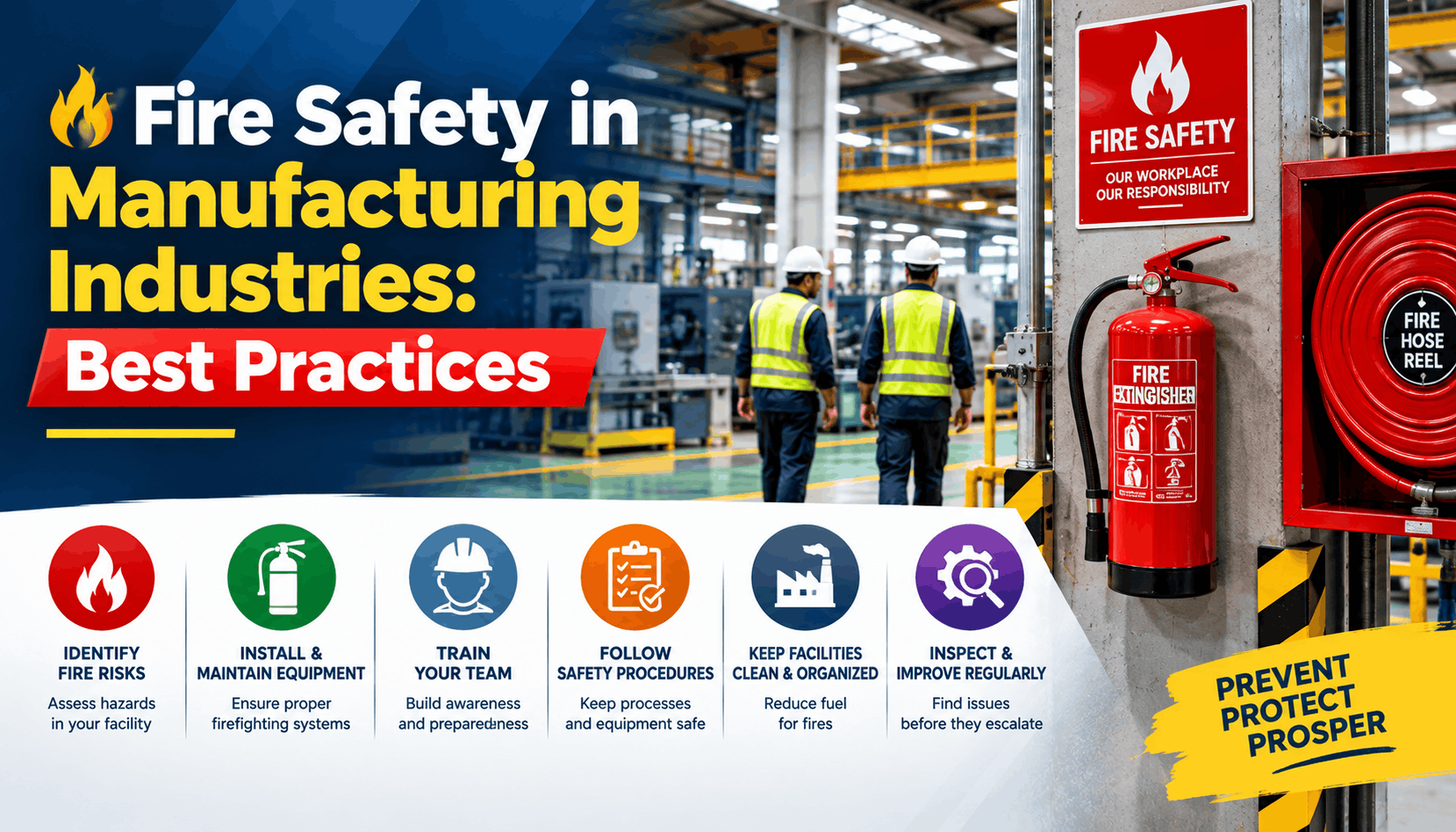
Fire Safety in Manufacturing Industries: Best Practices
Cyrus India Securities | 26-Oct-2026
Fire Safety in Manufacturing Industries: Best Practices
What if a small spark in your factory leads to major production losses? Manufacturing industries often deal with heavy machinery, electrical equipment, flammable materials, and high-temperature processes. Without proper precautions, these hazards can cause serious fires. Implementing effective fire safety practices in manufacturing industries helps protect employees, equipment, and business operations.
Why Is Fire Safety Important in Manufacturing?
Factory fires can result in injuries, damaged machinery, production downtime, and financial losses. A strong industrial fire safety plan helps identify hazards, improve emergency preparedness, and reduce the risk of fire-related incidents.
7 Best Practices for Industrial Fire Safety
1. Conduct Regular Fire Risk Assessments: Identify hazards around machinery, electrical panels, storage areas, and production lines.
2. Maintain Electrical Equipment: Inspect wiring, control panels, motors, and connections regularly to prevent overheating and electrical faults.
3. Install Fire Detection Systems: Suitable smoke detectors, heat detectors, and fire alarm systems can provide early warnings and help employees respond quickly.
4. Use Appropriate Fire Suppression Systems: Protect high-risk areas such as electrical cabinets, industrial machinery, and control rooms with systems designed for the specific fire hazard.
5. Keep Work Areas Clean: Remove combustible waste, control dust accumulation, and store flammable materials safely.
6. Train Employees: Conduct fire safety training and evacuation drills so employees understand alarms, emergency exits, assembly points, and reporting procedures.
7. Inspect and Maintain Equipment: Schedule regular inspections of fire alarms, extinguishers, suppression systems, emergency lighting, and other safety equipment.
Which Fire Protection Solutions Do Factories Need?
Every manufacturing facility has different risks. Depending on the application, protection may include fire alarm panels, smoke detectors, manual call points, sounders, emergency lights, and automatic fire suppression systems.
A professional fire risk assessment helps determine the appropriate equipment, installation requirements, and maintenance schedule. Fire protection systems should complement—not replace—preventive measures and emergency planning.
How Can Cyrus India Help?
Cyrus India Securities, through its SIRIUS Fire Safety Solutions, offers fire detection and suppression products for commercial and industrial applications. Its range includes smoke detectors, fire alarm panels, sounders, fire detection tubes, valves, connectors, and other suppression components.
Conclusion
Fire safety in manufacturing industries requires continuous attention, not just emergency equipment. Combining hazard prevention, early detection, suitable suppression systems, employee training, and regular maintenance can help create a safer factory.
Prevent hazards. Detect early. Protect your people and production.
Reference:
Multiple References